Inventory management is one of the most crucial aspects of running a successful business. It involves planning, organizing, and controlling the flow of goods from the point of origin to the point of consumption. Inventory management affects not only the profitability and efficiency of a business, but also its customer satisfaction and loyalty.
However, inventory management is also one of the most challenging aspects of running a business. It requires balancing the supply and demand of various products, taking into account factors such as seasonality, trends, preferences, costs, availability, and quality. It also requires monitoring and tracking the inventory levels, locations, and movements across different channels and warehouses.
To cope with these challenges, businesses need to leverage the power of data and analytics. This is where business intelligence (BI) comes in. BI is software that ingests business data and presents it in user-friendly views such as reports, dashboards, charts and graphs. BI tools enable business users to access different types of data — historical and current, third-party and in-house, as well as semi-structured data and unstructured data like social media. Users can analyze this information to gain insights into how the business is performing.
BI can help businesses optimize their inventory management by providing them with accurate, timely, and actionable information. BI can help businesses answer questions such as:
- How much inventory do we have in stock?
- How much inventory do we need to order or produce?
- How much inventory do we expect to sell or consume?
- How can we reduce inventory costs and wastage?
- How can we improve inventory quality and customer satisfaction?
By answering these questions, BI can help businesses make better decisions regarding their inventory management, such as:
- Reducing costs by minimizing excess inventory, avoiding stockouts or overstocking, optimizing pricing and discounts, and streamlining logistics and operations.
- Improving customer satisfaction by ensuring product availability, variety, and quality, meeting customer expectations and demands, and providing faster and more reliable delivery.
- Increasing efficiency by automating inventory processes, enhancing collaboration and communication across different departments and locations, and integrating with other systems and platforms.
To achieve these benefits, businesses need to keep up with the latest trends and innovations in BI for inventory optimization. In this article, we will discuss some of the most relevant and interesting trends that are shaping the future of BI for inventory optimization.
Cloud-based management
Cloud technology is transforming the way businesses store, access, and analyze their data. Cloud-based management enables businesses to store their inventory data in a centralized location that can be accessed remotely from any device or location. This promotes flexibility and scalability for businesses that have multiple channels or warehouses or operate in different regions or markets.
Cloud-based management also enables businesses to integrate their inventory data with other sources of data, such as sales, marketing, finance, or customer service. This provides a holistic view of the business performance and enables cross-functional analysis and reporting. For example, businesses can use cloud-based management to compare their inventory levels with their sales forecasts or customer feedback.
An important element of cloud-based management is artificial intelligence (AI). AI can help businesses automate their inventory processes, such as ordering, replenishment, allocation, or pricing. AI can also help businesses analyze their inventory data using advanced techniques such as machine learning or natural language processing. AI can provide businesses with insights that are beyond human capabilities, such as identifying patterns or anomalies in the data or predicting future outcomes or scenarios.
Predictive inventory
Predictive inventory is another trend that leverages AI to optimize inventory management. Predictive inventory uses historical, real-time, and customer data to forecast demand for different products at different times and locations. Predictive inventory also uses this data to optimize stock levels, replenish stock when needed, and adjust pricing according to demand fluctuations.
Predictive inventory can help businesses reduce inventory costs by avoiding overstocking or understocking, improve customer satisfaction by meeting customer needs and preferences, and increase revenue by capturing market opportunities and maximizing profit margins.
Warehouse automation
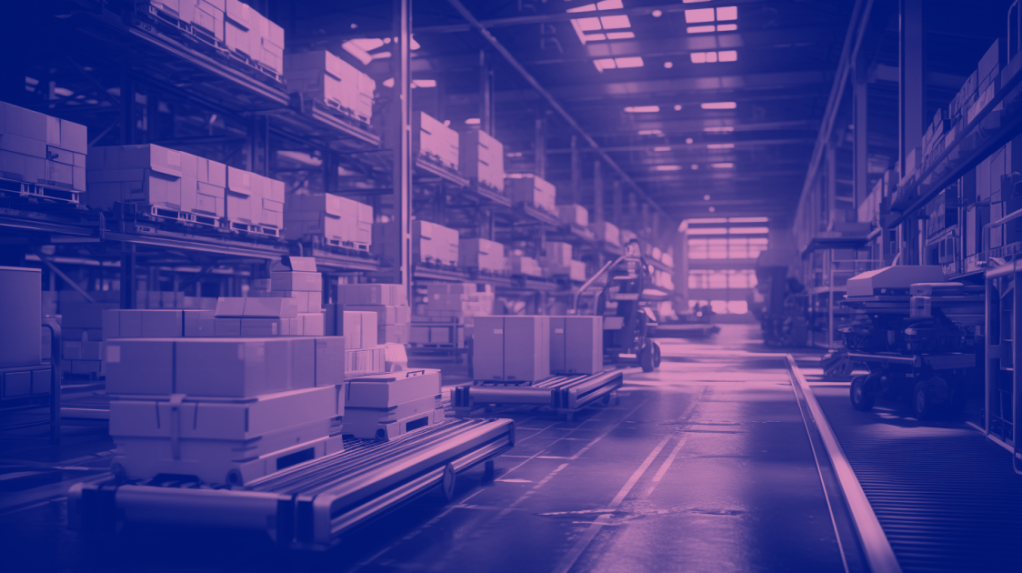
Warehouse automation is another trend that uses technology to enhance efficiency in warehousing operations. Warehouse automation involves using robotics and automation to perform tasks such as picking, packing, sorting, and transporting goods. Warehouse automation can reduce human error, labor costs, and safety risks, while increasing speed, accuracy, and productivity.
Warehouse automation can also improve inventory management by providing real-time visibility and control over the inventory status and location. Warehouse automation can also enable faster and more flexible delivery options for customers, such as same-day or next-day delivery.
Some types of robots that are increasingly used in warehouses to automate tasks are:
- AVGs (Automated Guided Vehicles) and AMRs (Autonomous Mobile Robots), which are robots that move goods within the warehouse using sensors, cameras, and navigation systems. These robots can operate autonomously or collaboratively with humans.
- Picking robots, which are robots that pick items from shelves or bins using grippers, suction cups, or vision systems. These robots can handle different types of products and sizes.
- Sorting robots, which are robots that sort items according to different criteria, such as destination, weight, or size. These robots can use conveyor belts, trays, or bins to transport and organize the items.
- Packing robots, which are robots that pack items into boxes or containers using folding, sealing, or labeling mechanisms. These robots can adapt to different shapes and dimensions of the items.
Blockchain
Blockchain is another trend that is being explored for its potential to improve inventory management. Blockchain is a distributed ledger that records transactions in a secure and immutable way. Blockchain can be used to track the movement of goods from source to destination, verify the identity of suppliers and customers, and prevent fraud and counterfeiting.
Blockchain can also ensure transparency and traceability in the supply chain, which can improve inventory quality and customer satisfaction. Blockchain can also facilitate secure transactions and data sharing among different parties in the supply chain, which can reduce costs and delays.
One example of a blockchain solution for inventory management was developped by Belgian maritime technology startup T-Mining – with the support of Deloitte and the Belgian Federation of Chambers of Commerce. The parties have developed a blockchain platform called TraceChain, which helps businesses track and trace their products throughout the supply chain. TraceChain uses smart contracts to record and verify the origin, quality, and authenticity of the products, as well as the terms and conditions of the transactions. TraceChain also uses QR codes or RFID tags to link the physical products with their digital records on the blockchain.
Conclusion
Inventory management is a vital function for any business that deals with physical goods. Inventory management can have a significant impact on the business performance, such as profitability, efficiency, and customer satisfaction.
However, inventory management is also a complex and challenging function that requires balancing multiple factors and dealing with uncertainty and variability.
To overcome these challenges, businesses need to leverage the power of data and analytics to gain insights into their inventory situation and make better decisions.
Business intelligence (BI) is software that helps businesses collect, store, and analyze their data and present it in user-friendly views such as reports, dashboards, charts, and graphs.
BI can help businesses optimize their inventory management by providing them with accurate, timely, and actionable information that can help them reduce costs, improve customer satisfaction, increase efficiency, and avoid stockouts or overstocking.
To achieve these benefits, businesses need to keep up with the latest trends and innovations in BI for inventory optimization. Some of these trends include:
- Cloud-based management, which enables remote access to inventory data and integrates with other systems and platforms.
- Predictive inventory, which uses AI and machine learning to forecast demand and optimize stock levels and pricing.
- Warehouse automation, which uses robotics and automation to perform warehousing tasks and improve speed, accuracy, and productivity.
- Blockchain, which ensures transparency and traceability in the supply chain and prevents fraud and counterfeiting.
These trends are shaping the future of BI for inventory optimization and providing businesses with new opportunities and competitive advantages.
If you want to learn more about these trends or how BI can help you optimize your inventory management, please connect with me on LinkedIn. In a professional capacity I can help you with your BI needs and provide you with customized solutions that suit your business goals. 😊
 merijn.me
Leave a comment